

How Proxy Servers Work and Why You Might Need One
Discover the unseen layer of the internet that manages your access and security. Understanding proxies can significantly enhance your control over online interactions. This guide provides clarity on a complex topic.
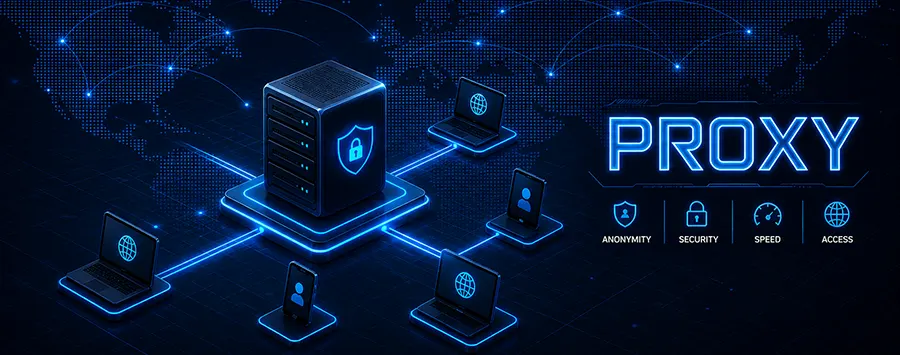
Residential
Datacenter
Mobile
| Parameter | Residential | Datacenter | Mobile |
|---|---|---|---|
| Price per GB | - 15 | {module:proxy}.3 - 1 | - 40 |
| Speed | Medium | High | Medium |
| Ban risk | Low | High | Minimal |
| Anti-bot bypass | Good | Poor | Excellent |
| Scalability | High | High | Medium |
| IP stability | Medium | High | Medium |
| Best use case | Scraping, SEO | High volume, speed | Social, ads |
Have you ever wondered how your browser magically retrieves a webpage from the other side of the world in seconds? While it seems like a direct conversation, there is often a silent intermediary facilitating the exchange. This is the realm of the proxy server, a fundamental yet frequently misunderstood component of modern networking. Think of it as a dedicated concierge for your internet requests, handling the logistics so you do not have to. This guide will demystify what a proxy is, how it operates under the hood, and the practical reasons it might become an essential tool in your digital toolkit.
The Essential Role of a Proxy Server
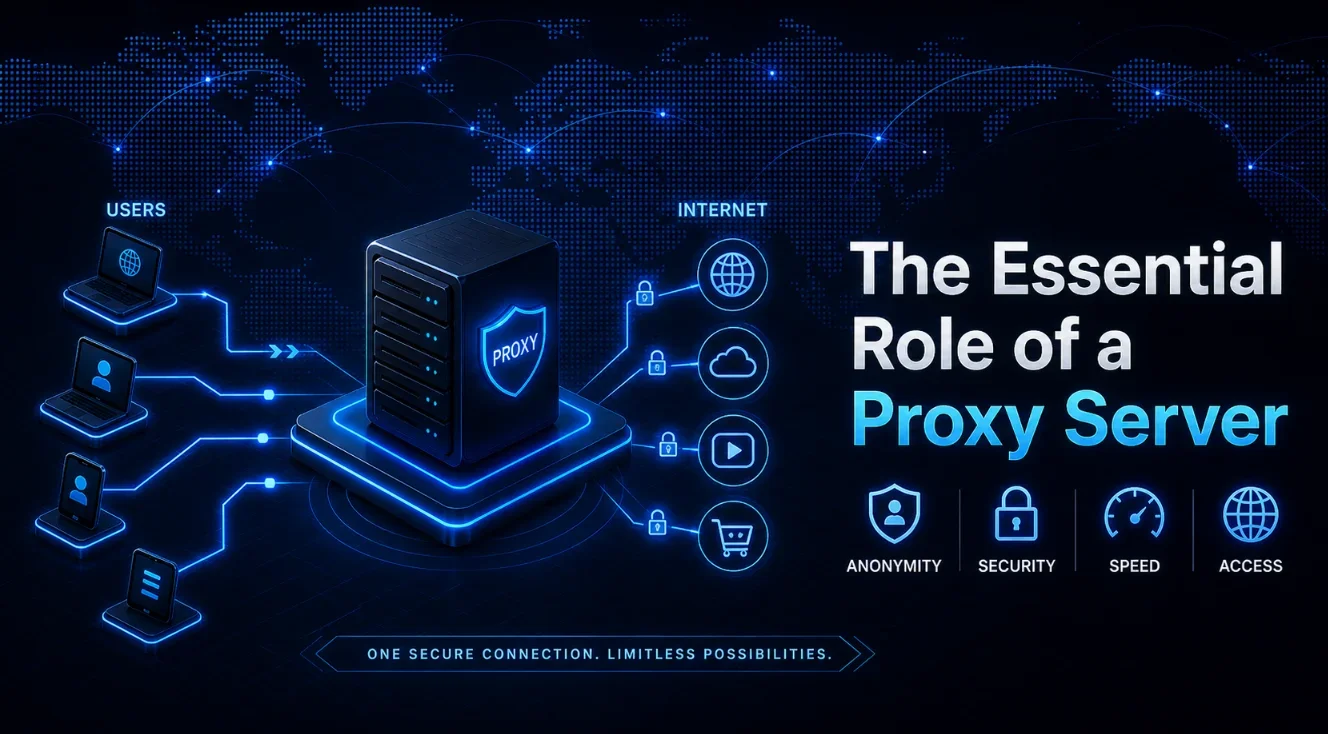
At its core, a proxy server is a computer system or application that acts as a gateway between you and the internet. It is an intermediary that separates end users from the websites they browse. When you use a proxy, your web traffic flows through this intermediary server on its way to the address you requested. The response from the web then comes back through that same proxy server, which then forwards the data it receives to you. This simple redirection forms the basis for a wide array of functionalities, from improving security to managing network traffic.
Why would anyone want to add this extra step? The reasons are surprisingly varied. For a large organization, a proxy provides a critical control point for security and administrative oversight. It can be used to enforce acceptable use policies, filter unwanted content, and cache frequently accessed data to save bandwidth. For an individual user, a proxy might be the key to accessing geo-restricted content or adding a layer of privacy to their browsing sessions. The fundamental value lies in the control and mediation the proxy provides.
It is crucial to understand that not all proxies are created equal. They can be configured for different purposes, and their level of anonymity can vary dramatically. Some proxies simply forward requests without hiding your IP address, while others are designed specifically to conceal your digital footprint. The architecture of this system, while conceptually simple, allows for immense complexity and specialization based on need.
Peeking Behind the Curtain How the Magic Happens
The process of a proxy handling a request is a fascinating dance of data packets. Let us break it down into a simple sequence. You type a website address into your browser. Instead of your computer connecting directly to the website's server, it is configured to connect to the proxy server first. Your computer sends its request to the proxy, saying, "Please fetch this webpage for me." The proxy server then makes its own request to the target website, receives the data, and subsequently passes that data back to your computer.
This intermediary step has a profound implication: to the destination website, the request appears to come from the proxy server's IP address, not your personal one. This is the foundational mechanism for the anonymity and geo-spoofing capabilities that proxies are famous for. If the proxy server is located in a different country, the website you are visiting will see the request as originating from that country, potentially granting you access to content reserved for that location.
Furthermore, many proxies perform a function called caching. If the webpage you requested has been recently fetched by another user through the same proxy, the server might serve you a stored copy from its local cache. This is dramatically faster than retrieving the page from the original source across the internet. This is why corporate networks and internet service providers often use proxies; they can significantly reduce bandwidth usage and speed up access to popular sites for everyone on the network.
A World of Choices Different Types of Proxies
Navigating the world of proxies can be confusing because there are several ways to categorize them. One of the most common distinctions is between forward proxies and reverse proxies. The proxy we have been discussing so far is a forward proxy. It sits in front of clients and is used to send requests to the public internet on their behalf. It is the classic intermediary for user privacy and content filtering.
A reverse proxy, on the other hand, sits in front of web servers. Its primary role is to protect the servers, load balance incoming traffic, and cache content to reduce server load. When you visit a major website like Google or Facebook, you are almost certainly connecting to a reverse proxy server first, which then intelligently directs your request to one of many backend servers. This setup enhances security, performance, and reliability for the service provider.
Beyond this, proxies are often defined by their level of anonymity, which leads to a common classification into three main types.
- Transparent Proxies: These proxies do not hide your IP address. The website you visit will still see your original IP. They are often used by organizations for content caching and filtering without the intention of providing anonymity. Your network might be using one without you even realizing it.
- Anonymous Proxies: This type identifies itself as a proxy to the web server but does not forward your IP address. The site will know you are using a proxy, but it will not know who you actually are. This offers a basic level of privacy.
- High Anonymity (Elite) Proxies: These are the most private options. They do not reveal that they are proxies and do not transmit your IP address. To the destination server, the request looks like any other regular connection from a user, making it very difficult to detect and block.
Why Bother? The Real-World Benefits
You might be asking what tangible benefits a proxy server offers in everyday use. The applications extend far beyond just masking your location for streaming services. For businesses, the value proposition is immense. A corporate proxy acts as a network security guard, monitoring and filtering traffic to prevent employees from accessing malicious or non-work-related websites. This can significantly reduce the risk of malware infections and data breaches. It also allows IT departments to control bandwidth usage, ensuring critical applications have the resources they need.
For the individual, privacy is often the biggest draw. In an age of pervasive data collection, using a proxy can help you browse the web without every site you visit logging your precise geographical location. Journalists and activists operating in sensitive environments rely on proxies to communicate and research without fear of reprisal. Even casual users can appreciate the ability to prevent websites from building a detailed profile of their online habits based on their IP address.
Performance is another key advantage, albeit one that is often overlooked. A well-configured caching proxy can speed up your internet experience. If you are on a network where many people visit the same news sites or social media platforms, the proxy stores a local copy. When you request that site, it loads from the local proxy almost instantly, rather than waiting for a response from a server that might be thousands of miles away. This is a common technique used by ISPs to improve perceived network speed for their customers.
Proxy Versus VPN Untangling the Confusion
It is impossible to discuss proxies without addressing the elephant in the room: Virtual Private Networks or VPNs. Many people use the terms interchangeably, but they are fundamentally different technologies serving overlapping but distinct purposes. A proxy server acts as a relay for specific applications or your web browser. You can configure your browser to use a proxy, but other applications on your computer, like your email client or online game, might continue to connect directly to the internet.
A VPN, conversely, creates an encrypted tunnel for your entire device. Once you connect to a VPN, all network traffic from your computer - every app, every service - is routed through this secure tunnel to the VPN server. This provides a blanket level of security and anonymity that a proxy simply cannot match. The encryption is the key differentiator; a VPN secures your data from prying eyes on your local network, while a standard proxy typically does not.
So, which one should you use? The answer depends on your goal. If you need to quickly change your virtual location for web browsing or bypass a simple content filter, a web proxy might be sufficient and is often easier to set up. However, if you are concerned about security on public Wi-Fi, want to encrypt all your internet traffic, or need to ensure anonymity for all your online activities, a VPN is the more comprehensive and secure solution. Think of a proxy as a specialized tool and a VPN as a complete security suite for your internet connection.
Potential Pitfalls and Security Considerations
While proxies offer significant benefits, it is vital to approach them with a clear understanding of the risks. The most important consideration is trust. When you use a proxy, you are routing all your web traffic through a third-party server. This means the operator of that proxy has the technical capability to see everything you are doing if the connection is not encrypted. They could potentially log your activity, inject ads into your web pages, or even steal sensitive information like login credentials.
This is why it is critical to use proxies from reputable providers. Free proxy services, while tempting, are often problematic. The old adage, "if you are not paying for the product, you are the product," rings especially true here. Free proxy operators may monetize their service by selling user data or by displaying intrusive advertisements. In some cases, free proxies have even been set up by malicious actors specifically to harvest information. Always research a proxy service before entrusting it with your data.
Another limitation is speed. Because your data has to travel an extra leg to the proxy server, it can sometimes slow down your internet connection. The impact depends on the proxy's quality, location, and current load. A high-quality, low-latency proxy may have a negligible effect, while a crowded, distant server can make browsing feel sluggish. Performance is a key factor when choosing a service.
| Type of Proxy | Primary Use Case | Anonymity Level | Ideal For |
|---|---|---|---|
| Transparent Proxy | Content Filtering, Caching | None | Businesses, Schools, Public Wi-Fi |
| Anonymous Proxy | Basic Privacy, Bypassing Simple Blocks | Medium | General Web Browsing |
| High Anonymity Proxy | Maximum Privacy, Accessing Restricted Content | High | Security-Conscious Users, Researchers |
A Final Thought on Responsible Use
Proxy servers are powerful tools that provide greater control over your online experience. They can enhance privacy, improve performance, and grant access to a more open internet. However, with this power comes responsibility. It is important to use these technologies ethically and in accordance with local laws and regulations. They should be seen as instruments for protecting privacy and enabling access to information, not for circumventing security measures or engaging in malicious activities.
The digital world is complex, and understanding the infrastructure that powers it, like proxy servers, empowers you to make informed choices. Whether you are a network administrator securing a corporate environment or an individual seeking more control over your personal data, the principles behind proxy technology are worth understanding. By choosing reputable services and being aware of both the benefits and the risks, you can leverage this technology to create a safer and more efficient online presence for yourself.