

A Clear Guide to Procuring Proxy Services the Right Way
Navigating the world of proxy servers can feel like a maze. This guide cuts through the complexity, showing you how to identify genuine needs and choose reliable, secure proxy providers for legitimate online tasks.
Let's talk about something that often gets whispered about in tech circles but deserves a full, clear conversation: buying proxy servers. Maybe you've heard the term tossed around, linked to anything from sneaker bots to international Netflix access. But the reality is far broader and, frankly, more mundane in its utility. This guide isn't about shady backdoors; it's about understanding a fundamental tool for modern digital tasks. We're going to walk through what proxies actually are, why you might legitimately need one, and most importantly, how to buy a proxy without stepping into a pitfall. Forget the jargon and the hype. Think of this as your roadmap to making an informed, sensible decision.
Getting Past the Buzzword to the Basics
So, what exactly is a proxy when you strip away the mystique? Imagine you're sending a letter, but instead of dropping it directly in your recipient's mailbox, you give it to a trusted courier. The courier delivers it for you. To the person receiving the letter, it appears to come from the courier's address, not yours. A proxy server works on a similar principle for your internet traffic.
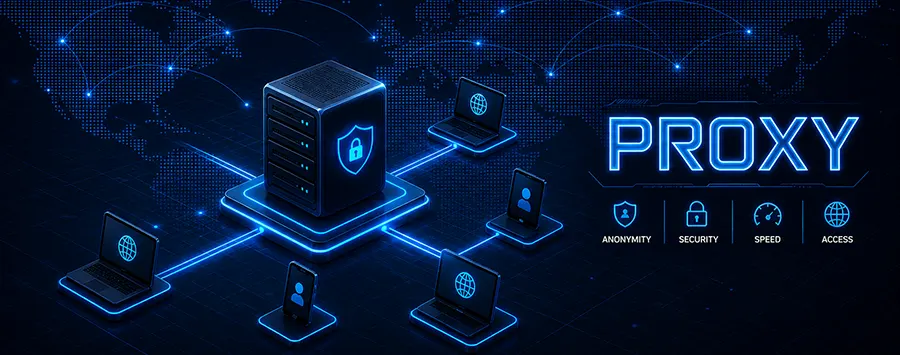
It acts as an intermediary between your device and the vast expanse of the web. You connect to the proxy, and the proxy forwards your requests to websites and services. The crucial part is that the website sees the request coming from the proxy's IP address, not your personal one. This simple relay function unlocks a range of possibilities, both for individual users and large businesses. It's a tool, and like any tool, its value depends entirely on the hand that wields it.
Why does this matter? Your IP address is more than just a number; it's a digital fingerprint tied to your location and internet service provider. By masking it, a proxy can help you interact with the online world in different ways. Some uses are about privacy, others about functionality, and many are about pure, practical business operations. The key is to start with a solid understanding of this core mechanism before diving into the different flavors available on the market.
The Many Faces of Proxy Servers
Not all proxies are created equal. Walking into a purchase without knowing the types is like buying a car without knowing if you need a sedan or a truck. The differences are critical and will directly impact performance, security, and cost. Let's break down the most common categories you'll encounter.
First, you have datacenter proxies. These are the workhorses, generated en masse from powerful servers in data centers. They offer blazing speed and are often the most affordable option. Businesses use them for large-scale tasks like web scraping, ad verification, and SEO monitoring. However, because their IPs are clearly flagged as belonging to a hosting company, some sophisticated websites can detect and block them more easily.
Then there are residential proxies. These are the gold standard for blending in. They use IP addresses assigned by real Internet Service Providers to actual homes. Your traffic appears to be coming from a regular person's computer in a specific city or country. This makes them incredibly difficult to detect and block. They are ideal for market research, accessing localized content, or any task where appearing as a genuine user is paramount. Naturally, this quality comes at a higher price point.
A third major category is mobile proxies. These use IP addresses assigned by cellular networks to mobile devices. They are the rarest and often the most expensive, prized for their high level of trust since mobile IPs are highly dynamic and closely guarded by carriers. They are typically used for very specific applications like mobile ad testing or app development.
Beyond the source, you also need to consider the protocol, with SOCKS5 and HTTP/HTTPS being the main ones. SOCKS5 is more versatile, handling all kinds of traffic, while HTTP proxies are designed specifically for web browsing. Making the right choice here depends on the software you plan to use.
Why Would a Regular Person or Business Need One?
If you're thinking proxies are only for tech gurus or large corporations, think again. There are countless legitimate, everyday reasons for using one. Let's dismantle the stereotype and look at the practical applications.
For the individual, it might be about accessing information. A researcher studying global news trends might need to see how a story is presented on different countries' local news sites. A traveler planning a trip might want to check flight prices from the departure country's perspective, as fares can vary. A consumer might use a proxy to access a streaming service's catalog available in another region, purely for personal entertainment during a temporary relocation.
For businesses, the uses are even more profound. Companies operating in multiple countries need to test their websites and ads from local IPs to ensure a smooth customer experience. E-commerce brands monitor competitors' pricing and inventory across different regions. Marketing agencies verify that client ads are appearing correctly and not next to inappropriate content. Software developers test their applications from various geographic locations to check performance and access.
The common thread across all these examples is the need for a specific, legitimate viewpoint - a digital vantage point that isn't your own. It's about gathering data, testing systems, or accessing services in a way that reflects real-world conditions. When used ethically and within the bounds of a website's terms of service, these tools are not about deception but about accurate analysis and fair access.
Separating Ethical Use from the Gray Areas
It's impossible to have this discussion without touching on the gray areas. We must address the elephant in the room: using proxies to circumvent bans, engage in fraudulent ticket purchasing, or hide illegal activities. This guide operates from a foundational principle of ethical technology use.
A reputable provider will have clear terms of service that prohibit activities like credential stuffing, fraud, or attacks on networks. The goal of buying a proxy should be to enable work, research, or access that is otherwise hindered by simple geographic or network limitations, not to violate laws or platform rules. Think of it as using a courier to get a package to a remote village, not to smuggle contraband. Your intent defines the tool's purpose.
Your Checklist Before You Spend a Dime
Ready to start looking? Hold on. Rushing to the first Google result for "buy cheap proxy" is a recipe for disappointment, or worse, a security breach. You need a plan. What are you actually trying to accomplish? Be brutally honest with yourself about your primary need.
Are you focused on speed for data collection? Then datacenter proxies might suit you. Is appearing as a real user in London your top priority? Then residential proxies from the UK are non-negotiable. Do you need to manage multiple social media accounts for a business without triggering security flags? Specific, session-supporting residential proxies are key. Nailing down your core objective will instantly narrow the field.
Next, consider volume and rotation. How many IP addresses do you need? Do you need a sticky IP that stays the same for hours or days (for tasks like maintaining a login session), or do you need rotating IPs that change with every request (for scraping or avoiding detection)? Providers offer different models, like pay-per-IP or pay-per-traffic (GB). Your choice here dramatically affects cost.
Finally, think about locations. Do you need global coverage or just IPs from a handful of specific cities? The more precise your geographic requirements, the more you need to verify a provider's pool in those areas. Don't just take their word for it; look for network size statistics and location lists.
Features You Should Never Compromise On
In your search, certain features are non-negotiable for a professional, safe experience. First is reliability and uptime. A proxy that disconnects constantly is worse than useless. Look for providers that guarantee high uptime percentages, ideally above 99%. Second is speed and low latency. Test networks if possible, because a slow proxy will cripple your workflow.
Third, and most critical, is security. Does the provider offer support for HTTPS connections to encrypt traffic between you and the proxy? Do they have a clear, public privacy policy regarding logs? A trustworthy provider will often have a "no-logs" policy, meaning they don't record your online activity. Customer support is another key indicator; responsive support suggests a legitimate operation.
Navigating the Marketplace of Providers
The market is flooded with options, from well-established brands to fly-by-night operations. How do you tell them apart? Start by looking for transparency. A professional provider will clearly list their proxy types, pricing, network size, and supported locations. They will have detailed documentation and FAQs.
Read independent reviews on tech forums and review sites. Pay attention to recurring complaints about downtime, poor speeds, or fraudulent billing. Be wary of providers selling "unlimited" bandwidth at dirt-cheap prices - this is often a red flag for overcrowded, poor-quality networks or even honeypots set up to collect data.
A legitimate business will offer multiple payment options and clear billing cycles. They might offer free trials or small, low-cost test packages so you can evaluate their service before committing significant funds. This is a sign of confidence in their product. Avoid providers that only accept cryptocurrency unless that is your specific preference; traditional payment methods often come with more buyer protection.
To simplify the comparison, here is a breakdown of the core proxy types and their best uses:
| Proxy Type | Source of IP Address | Best For | Considerations |
|---|---|---|---|
| Datacenter | Cloud servers, data centers | Web scraping, SEO tools, high-speed tasks | Fast & affordable, but easier to detect and block. |
| Residential | Real ISP-assigned home addresses | Ad verification, market research, accessing geo-content | Highly trustworthy, blends in well, more expensive. |
| Mobile | Cellular networks (3G/4G/5G) | Mobile app testing, specific ad campaigns | Highest trust level, most expensive, limited availability. |
Stepping Through a Secure Purchase Process
You've done your research and picked a potential provider. Now what? The purchase process itself should raise no alarms. Begin by signing up for an account. You should be asked to create a secure password, and many providers now offer two-factor authentication - enable it if available.
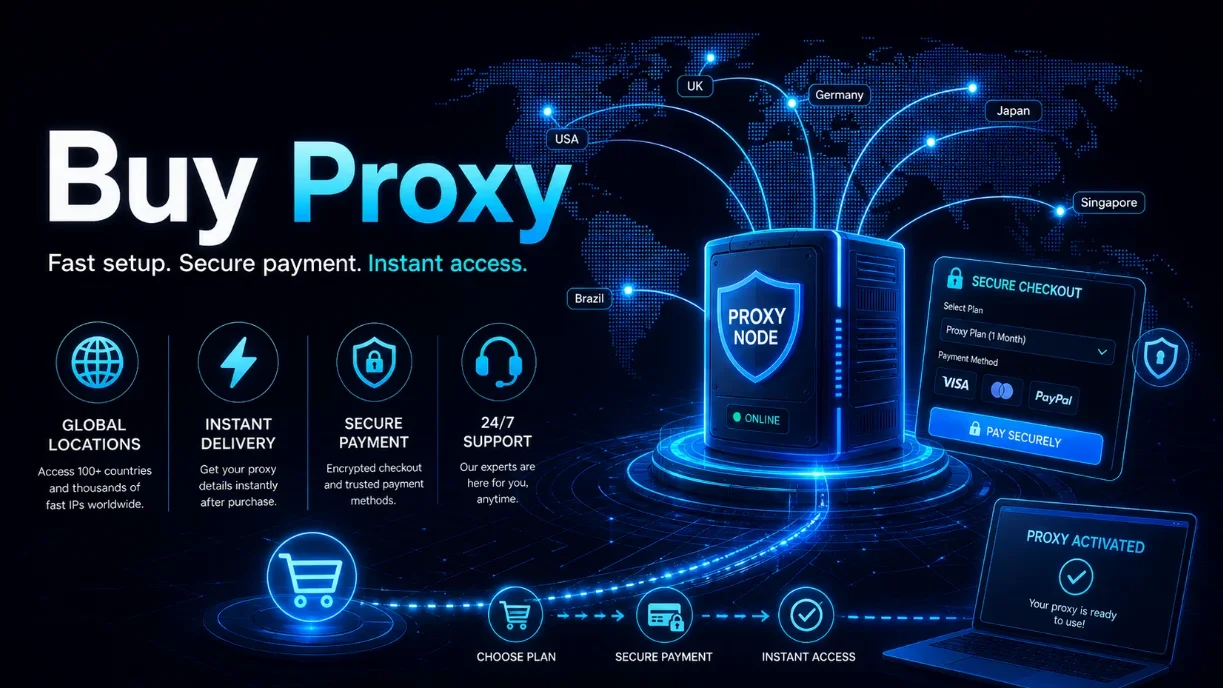
Next, you'll typically choose a plan or configure a custom package. This is where you select your proxy type (residential, datacenter), the number of IPs or amount of traffic, the geographic locations, and the rotation settings. Review your order summary carefully before payment.
Upon payment, you should immediately receive access to a dashboard or control panel. This is the heart of your service. Here you will find your crucial connection details:
- Proxy IP address and port number
- Your username and password for authentication
- Connection endpoints for different protocols (HTTP, HTTPS, SOCKS5)
- Tools to generate new IPs or change locations
A professional dashboard will also show your usage statistics, remaining bandwidth, and active sessions. It should feel like a managed service, not a secret knock on a dark web door. The final step is integration - inputting these details into your specific software, browser extension, or application settings.
A Quick Word on Setup and Configuration
Don't panic if you're not a network engineer. Most modern proxy applications make setup straightforward. You'll usually enter the IP, port, username, and password into a dedicated settings field. For browser use, extensions can manage this seamlessly. For advanced users, configuring proxy settings at the operating system level is an option. The provider's documentation and support should guide you through this process without hassle.
Protecting Yourself in the Proxy Ecosystem
Even when using a paid service, maintaining your own security hygiene is paramount. Never, ever use the same password for your proxy account that you use for email, banking, or other critical accounts. Treat your proxy login credentials as sensitive keys.
Be mindful of what you do while connected. A proxy provides a layer of privacy from the destination website, but it does not make you anonymous to the proxy provider itself if they keep logs. Therefore, avoid transmitting highly sensitive personal information unless you thoroughly trust the provider's no-logs policy and security stance.
Regularly monitor your usage from the provider's dashboard. Unexpected spikes in traffic could indicate that your credentials have been compromised or that there's a misconfiguration in your software. Good security is about ongoing vigilance, not just a one-time setup.
When Your Needs Evolve Beyond the Basics
As you become more comfortable, you might find your projects growing. Perhaps you need to manage hundreds of simultaneous connections or require a fully automated proxy rotation solution. This is where advanced features and enterprise solutions come into play.
Look for providers offering API access, which allows you to programmatically fetch new IPs, check balances, and integrate proxy management directly into your own software. Some offer sophisticated session control, letting you fine-tune how long an IP stays assigned to a particular task.
For large teams, user management features become essential - the ability to create sub-accounts, assign different access levels, and distribute bandwidth across departments. Scaling up should feel like unlocking new capabilities, not hitting constant walls. A provider that grows with you is a valuable long-term partner.
Making This Powerful Tool Work for You
The journey to buy a proxy service shouldn't be shrouded in mystery or tinged with doubt. It's a practical decision for a digital tool, much like choosing a web hosting provider or a project management app. The power lies in your hands - to use it responsibly, to choose wisely, and to apply it to tasks that drive genuine progress, whether in personal research or business innovation.
Start with a clear goal. Arm yourself with the knowledge of different proxy types and their strengths. Vet providers with a critical eye, prioritizing security and reliability over the allure of a rock-bottom price. Follow a secure purchase and setup process. By approaching it this way, you transform the act of buying a proxy from a speculative gamble into a strategic, professional procurement. You move from being a casual buyer to an informed user, capable of leveraging this technology to see the web from any angle you need.