

High Speed Proxies The Ultimate Guide to Fast Reliable Connections
Navigate the digital world with unmatched speed and anonymity. High-speed proxies are your gateway to efficient data collection and secure browsing. Discover how to choose and leverage the fastest proxies for your specific needs.
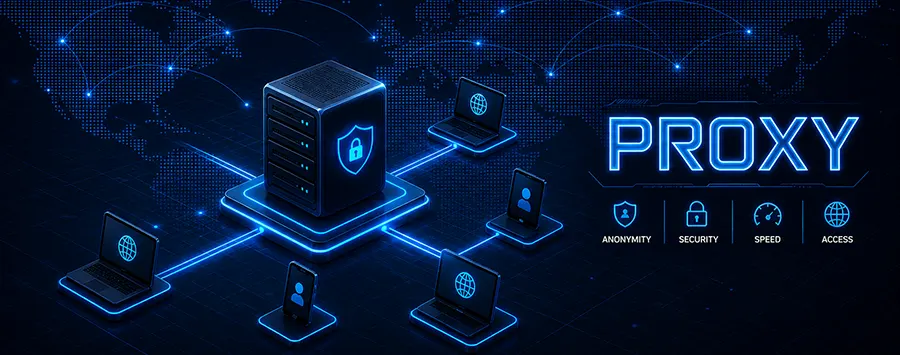
Have you ever felt like you are waiting for the internet to catch up with you? In a world where milliseconds can determine success, slow connections are more than an inconvenience; they are a liability. This is where high-speed proxies come into play, acting as the express lanes of the internet. They are not just about hiding your IP address; they are about supercharging your online activities, from gathering market intelligence to managing multiple social media accounts without a hiccup.
Think of a proxy server as a middleman between your computer and the wider internet. Now, imagine that middleman is an Olympic sprinter instead of a casual walker. A high-speed proxy ensures that this intermediary process happens almost instantaneously, minimizing latency and maximizing throughput. For businesses and individuals who rely on fast, uninterrupted data flow, investing in a sluggish proxy is like trying to win a Formula 1 race with a scooter. The right high-speed proxy can be the difference between staying ahead of the competition and falling hopelessly behind.
This guide will dive deep into everything you need to know about high-speed proxies. We will explore what makes them tick, the different types available, and the critical factors that separate a truly fast proxy from a mediocre one. More importantly, we will show you how to integrate these powerful tools into your workflow to achieve tangible results, whether you are a data scientist, a digital marketer, or simply someone who values privacy and performance.
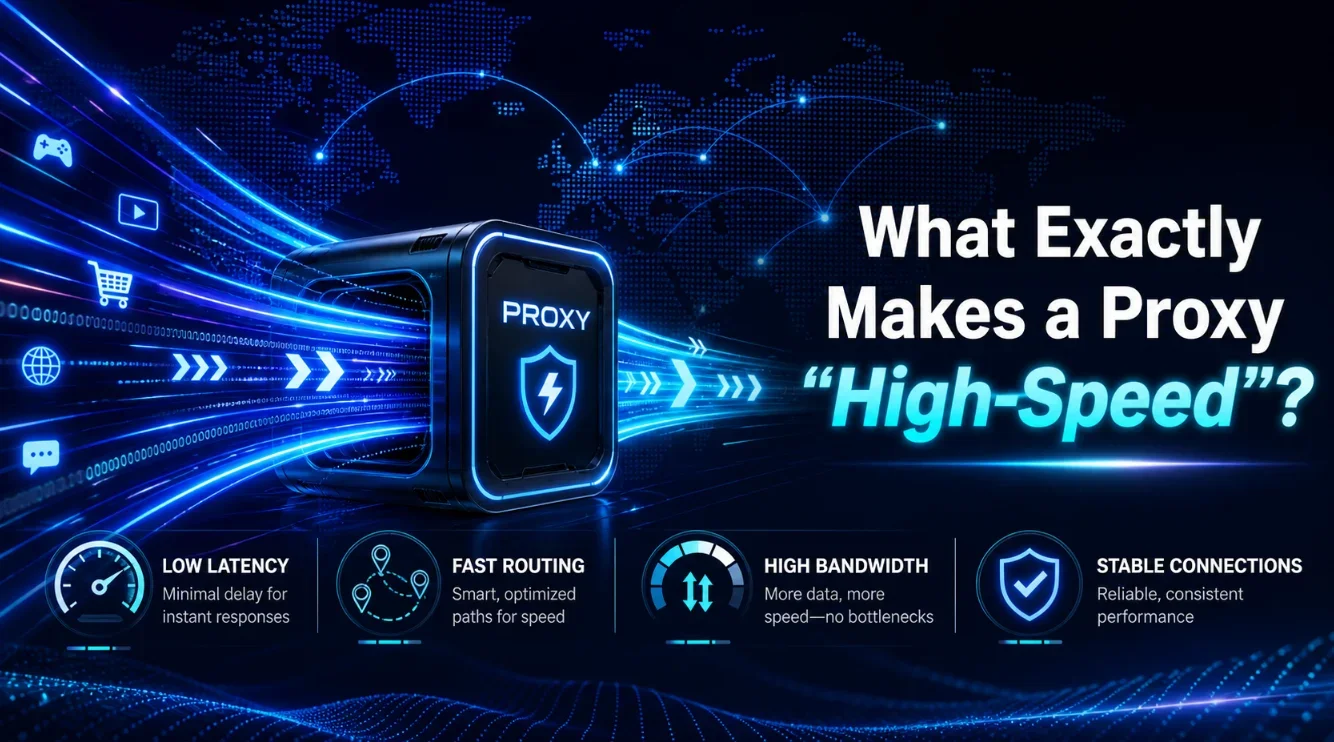
What Exactly Makes a Proxy "High-Speed"?
It is a common misconception that any proxy labeled "fast" will deliver blazing speeds. The reality is more nuanced. Speed in the context of proxies is influenced by a combination of hardware, software, and network infrastructure. Let us break down the key components that contribute to a proxy's velocity.
First and foremost is bandwidth. This refers to the maximum rate of data transfer across a network. A high-speed proxy provider invests in substantial bandwidth capacity to ensure that multiple users can operate simultaneously without experiencing a slowdown. It is like having a multi-lane highway instead of a single-country road; even during peak traffic, data can flow freely.
Another critical factor is server hardware. The physical servers hosting the proxy software need to be powerful. This means using modern CPUs, ample RAM, and fast solid-state drives (SSDs). Outdated hardware becomes a bottleneck, unable to process requests quickly, no matter how good the network connection is. You would not use a vintage typewriter to write a novel today, so why use outdated servers for modern internet tasks?
Perhaps the most significant element is location and network latency. The physical distance between you, the proxy server, and the target website matters immensely. Data travels at the speed of light, but even that speed introduces delays over long distances. A high-speed proxy service will have a globally distributed network of servers, allowing you to connect to a node that is geographically close to both you and your target destination. This minimizes the time it takes for a data packet to make a round trip, resulting in a snappier response.
Beyond Anonymity: The Real Power of Speed
While anonymity is a primary reason many people use proxies, speed unlocks a whole new dimension of possibilities. When your proxy connection is fast and stable, it transforms from a simple privacy tool into a powerful business asset.
Consider web scraping, for instance. This process involves automatically extracting large amounts of data from websites. A slow proxy can turn this task into a multi-day ordeal, often leading to incomplete data or timeouts. A high-speed proxy, however, allows you to scrape data efficiently and reliably, enabling you to gather competitive intelligence, monitor prices, or aggregate content in a fraction of the time. It is the difference between having a team of librarians manually copying from books and having a high-speed scanner digitize an entire library overnight.
For social media managers and digital marketers, speed is non-negotiable. Managing multiple accounts requires quick switching between different IP addresses. A slow proxy would make posting, engaging, and analyzing performance a tedious process. High-speed proxies facilitate seamless account management, ensuring your social media strategy is executed flawlessly without technical delays holding you back.
Even for the average user, a fast proxy enhances the experience of geo-spoofing. Want to watch a sporting event available only in another country? A laggy proxy will result in constant buffering and poor video quality. A high-speed proxy provides a smooth, high-definition streaming experience as if you were actually located in that region, making it a vital tool for accessing global content.
The Sneaky Cost of Slow Proxies
It is easy to focus on the upfront cost of a proxy service, but have you considered the hidden cost of slow performance? Time is money, and a proxy that slows down your operations can have a real financial impact.
For businesses, slow data collection means delayed insights. You might miss a crucial market trend or a competitor's price change because your scraping jobs are taking too long. This lag can lead to missed opportunities and reactive, rather than proactive, decision-making. The few dollars saved on a cheaper, slower proxy service can easily be outweighed by the value of lost time and missed intelligence.
On an individual level, a slow proxy can be incredibly frustrating. It turns simple tasks like browsing or streaming into exercises in patience. This often leads users to disable the proxy, sacrificing their privacy for the sake of convenience. A high-speed proxy eliminates this trade-off, allowing you to maintain both security and performance without compromise.
A Look at the Different Flavors of Fast Proxies
Not all high-speed proxies are created equal. The technology behind them can vary significantly, impacting their speed, reliability, and suitability for specific tasks. Understanding these differences is key to making the right choice.
Datacenter proxies are the most common type. They originate from servers in data centers and are known for their raw speed and affordability. Because they are not associated with an Internet Service Provider (ISP), they offer a high degree of anonymity and can handle large volumes of traffic. However, some websites are adept at detecting and blocking traffic from known data center IP ranges, which can be a limitation for certain advanced scraping tasks.
Residential proxies are the gold standard for blending in. These proxies use IP addresses assigned by real ISPs to real homes, making their traffic appear completely legitimate. While they were historically slower than datacenter proxies, advancements in technology have led to the emergence of high-speed residential proxy networks. They are ideal for tasks that require the highest level of stealth, such as accessing particularly sensitive or well-protected websites.
Mobile proxies use IP addresses assigned by mobile carriers. They are a subset of residential proxies and are highly effective for tasks that need to mimic mobile device traffic specifically. Their speed can be excellent, depending on the carrier network they are routed through.
So, Which One is the Fastest for Me?
The answer depends entirely on your primary use case. If your priority is pure, unadulterated speed for tasks like bulk downloading or general browsing where detection is less of a concern, datacenter proxies are often the best bet. They provide the highest bandwidth at the lowest cost.
If your task involves interacting with sophisticated platforms like social media networks, e-commerce sites with anti-bot measures, or ad verification, then the "speed" you need is more about reliability and success rate. In these cases, a high-speed residential proxy network will be faster in the sense that it completes the job successfully on the first try, without getting blocked. The raw data transfer speed might be comparable to a datacenter proxy, but the avoidance of CAPTCHAs and blocks makes the overall process much more efficient.
Choosing a Provider: What to Look For Beyond the Speed Test
Selecting a high-speed proxy provider can feel overwhelming. Many services claim to be the fastest, but speed alone is not enough. You need a provider that offers a balanced combination of performance, reliability, and features.
First, investigate the size and quality of their IP pool. A larger pool of IP addresses means less chance of IP exhaustion and better load distribution, which contributes to consistent speed. It also reduces the likelihood of being flagged for sending too many requests from a single IP.
Second, look for granular location targeting. Can you choose a proxy server in a specific city, or just a country? Precise targeting is crucial for minimizing latency. If you are scraping a website hosted in London, connecting to a proxy in London will always be faster than connecting to one in Sydney.
Third, examine the protocol support. Modern proxies often support SOCKS5 in addition to HTTP/HTTPS. SOCKS5 is a more versatile protocol that can handle any type of traffic, which can lead to performance benefits for certain applications. A provider that offers both gives you flexibility.
Finally, consider the dashboard and API. A well-designed control panel and a robust API are indicators of a professional service. They allow you to manage your proxies efficiently, rotate IPs, and integrate the service into your own software, which ultimately saves you time and streamlines your operations.
Setting Up for Success: Maximizing Your Proxy Speed
Once you have chosen a high-speed proxy provider, proper configuration is essential to get the most out of your investment. Even the fastest proxy can be slowed down by poor setup.
One of the most effective techniques is IP rotation. Constantly using the same IP address for a high volume of requests can trigger rate limits or bans, causing delays. Configuring your software to rotate through different IP addresses at set intervals helps distribute the load and mimic natural human behavior, keeping your connections smooth and uninterrupted.
Another best practice is session control. For tasks that require you to stay logged into an account, you will need to maintain a consistent IP address for the duration of that session. Understanding when to use sticky sessions (which keep the same IP) and when to rotate IPs is key to balancing speed with functionality.
It is also wise to adjust your request rate. Aggressively sending thousands of requests per second from a single IP is a surefire way to get blocked, regardless of your proxy's speed. Throttling your requests to a reasonable rate that mimics human interaction will result in a higher success rate and a more efficient data collection process overall. Sometimes, slower and steadier wins the race.
Common Speed Bumps and How to Avoid Them
Even with a great provider, you might occasionally encounter performance issues. Being able to diagnose these problems is a valuable skill.
A frequent culprit is network congestion. This can happen on your local network, the proxy provider's network, or somewhere in between. If you experience a sudden slowdown, try connecting to a different proxy server in a different location. If the speed improves, the issue was likely with the original server or its network path.
Another issue could be the target website itself. The website's servers might be slow or under heavy load. You can test this by accessing the website directly without a proxy. If it is still slow, the problem is not with your proxy.
Finally, always ensure that your own internet connection is not the bottleneck. Run a speed test without the proxy to establish a baseline. Your proxy cannot make your connection faster than your base internet speed allows; it can only add a layer of processing and routing on top of it.
The Future is Fast: Where Proxy Technology is Headed
The demand for speed and reliability will only intensify. Proxy providers are continuously innovating to stay ahead. We are seeing a trend towards smarter proxy networks that use artificial intelligence to dynamically route traffic through the fastest and least congested paths automatically.
Integration with other tools is also becoming seamless. Expect to see proxies bundled directly into web scraping platforms, browser automation software, and security suites, making them easier than ever to deploy. The goal is to make high-speed proxy technology invisible to the end-user - a powerful engine working quietly in the background to deliver a flawless online experience.
Making Your Decision: A Handy Comparison
To help you visualize the key differences, here is a simple comparison of the main proxy types based on speed-related characteristics.
| Proxy Type | Best For | Typical Speed | Stealth Level |
|---|---|---|---|
| Datacenter | High-volume scraping, general browsing | Very High | Medium |
| Residential | Social media, ad verification, avoiding blocks | High | Very High |
| Mobile | Tasks requiring mobile IPs, app testing | Variable (Good to High) | Very High |
Key Takeaways Before You Dive In
As you venture into the world of high-speed proxies, keep these points in mind:
- Speed is a combination of bandwidth, server hardware, and geographic location.
- Your use case dictates the best type of proxy; datacenter for raw speed, residential for stealth.
- Look for providers with large IP pools, precise location targeting, and good technical support.
- Proper setup, including IP rotation and request throttling, is crucial for maintaining speed.
- Always test your own connection first to rule out local internet issues.
High-speed proxies are more than a technical tool; they are an enabler. They empower you to work smarter, gather data more effectively, and browse the web with confidence. By understanding the principles outlined in this guide, you are well-equipped to choose a solution that not only meets your speed requirements but also enhances your overall digital strategy.